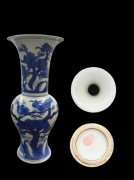
青花松竹梅凤尾尊,为传世青花重器,器型舒展恢弘,是中国古代陶瓷艺术中极具代表性的陈设雅器。此尊取凤尾之姿,口沿外撇如凤翼舒展,长颈收束,中部鼓腹,圈足内敛,线条由敞口至底足一气呵成,起伏婉转,兼具雄浑气度与清雅韵味。凤尾尊的造型溯源久远,自古代花觚形制演变而来,褪去古铜器的厚重,赋予瓷质器物灵动秀逸的美感,本件器物比例拿捏精妙,口、颈、腹、足各段配比均衡,观之稳重而不臃肿,挺拔而不单薄,放置于厅堂案几之上,自带端庄肃穆的古雅气场,是旧时文人雅士钟爱的厅堂陈设瓷。
The Blue and White Phoenix-Tail Zun with Pine, Bamboo and Plum Blossom Patterns is a treasured handed-down blue-and-white porcelain masterpiece. It boasts an expansive and grand shape, serving as a highly representative decorative art piece in ancient Chinese ceramic art. Shaped like phoenix tail, the vessel features a widely flared rim resembling spread phoenix wings, a slender neck, a bulging midsection and a restrained ring foot. Its lines flow smoothly from the mouth to the base, undulating gracefully, combining majestic momentum and elegant charm. Evolving from the ancient gu form, the phoenix-tail zun discards the heaviness of bronze wares and endows porcelain works with vivid and refined beauty. This piece features exquisitely balanced proportions of mouth, neck, belly and foot. It looks steady without bulkiness, tall and graceful without thinness. Displayed on a desk in the hall, it carries solemn and antique charm, which was a favorite decorative porcelain for ancient literati.
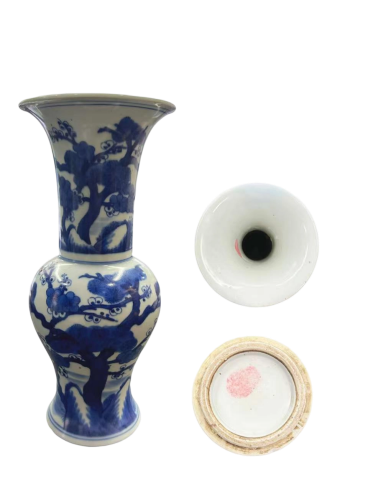
整器通体以青花绘松竹梅“岁寒三友”主题纹饰,青花发色沉稳浓艳,蓝白对比鲜明,釉面莹润光洁,白釉温润似玉,将青料的幽蓝之美烘托得淋漓尽致。画师以娴熟的笔墨勾勒景物,苍松虬曲挺拔,枝干盘绕遒劲,松针层叠繁茂,尽显饱经风霜而傲然屹立的风骨;翠竹亭亭而立,竹节清晰分明,叶片疏密错落,透着虚怀有节的君子品格;寒梅疏枝横斜,点点蓓蕾缀于枝桠,于冷寂之中吐露生机,传递凌寒独放的高洁品性。松、竹、梅三者共生一器,布局疏密得当,主次相宜,没有繁冗堆砌之感,画面层次深远,近景草木,远景坡石,寥寥几笔便铺展成一幅意蕴悠长的文人山水画卷,将传统文人推崇的高洁品格寄托于瓷绘之间,以瓷为纸,以钴料为墨,把中国画的笔墨意境移植到陶瓷表面,实现书画与瓷艺的完美交融。
The whole vessel is decorated with pine, bamboo and plum blossom patterns, known as the Three Friends of Winter. The blue and white pigment presents a deep and rich hue with striking contrast between blue and white. The glaze surface is lustrous and smooth, and the white glaze is as mild as jade, setting off the profound blue beauty of cobalt pigment perfectly. The painter depicted scenery with skilled brushwork. The pines twist and stand upright with tough winding branches and dense pine needles, showing the integrity of standing firm through hardships. The bamboo grows tall and straight with distinct joints and scattered leaves, embodying the noble virtue of modesty and integrity. Plum branches stretch sideways, dotted with flower buds, showing vitality in cold weather and noble character of blooming against frost. The three plants are painted harmoniously on the porcelain with well-arranged composition. The scene has profound layers, with plants in the foreground and rocks in the distance. With simple strokes, it unfolds a profound literati landscape painting. The noble morals valued by traditional literati are embedded in porcelain painting. Using porcelain as paper and cobalt pigment as ink, it integrates the artistic conception of Chinese painting with ceramic craftsmanship.
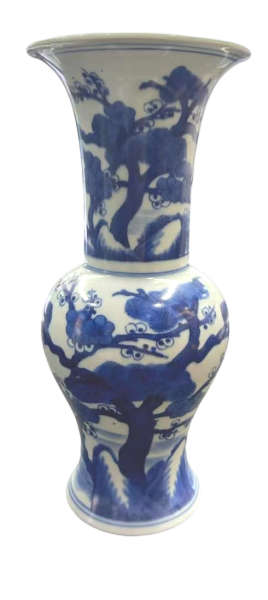
岁寒三友题材,根植于中华千年文脉,是传统艺术经久不衰的经典母题。寒冬之时,草木凋零,唯松常青、竹不衰、梅吐芳,古人以此三种植物喻君子,象征坚贞不屈、清雅自持的精神追求。将这一题材绘于凤尾尊之上,并非单纯的装饰,而是承载着器物主人的精神志趣。在古时,这类大型凤尾尊多陈设于厅堂,宾客到访,观器赏画,一眼便能读懂器物背后蕴含的君子德行。这件传世古瓷,将文学意象、绘画美学与制瓷工艺三者熔于一炉,不只是一件陈设器物,更是一件可以直观品读的文化载体,跨越岁月,把古人的精神审美留存至今。
The theme of Three Friends of Winter is rooted in thousands of years of Chinese culture and has long been a classic motif in traditional art. In cold winter, most plants wither, while pines stay green, bamboos remain vigorous and plum blossoms bloom. Ancient people used these three plants as metaphors for gentlemen, symbolizing perseverance and elegant self-discipline. Painting this theme on phoenix-tail zun is not merely for decoration, but carries the spiritual aspiration of the owner. In ancient times, such large phoenix-tail zuns were mostly displayed in halls. When guests visited, they could understand the gentlemanly virtue behind the vessel by appreciating the painting. This handed-down ancient porcelain integrates literary imagery, painting aesthetics and porcelain-making craftsmanship. It is not merely a decorative object, but a cultural carrier to appreciate, preserving the aesthetic taste of ancient people across centuries.
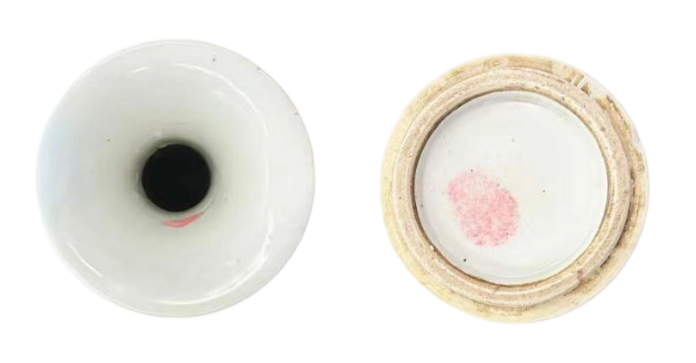
细看胎底,胎质坚实细腻,底足修胎老道利落,可见经年累月传世使用留下的岁月痕迹,底心留存旧藏朱红鉴藏印记,是历代藏家递藏的实物佐证,印证这件器物绵延不绝的流传脉络。古瓷的珍贵,不只在于成型施彩的精工,更在于它承载的流传故事。数百年间,它几经藏家之手,静立厅堂,阅尽世事变迁,釉面在时光浸润之下,生出温润内敛的包浆,这是任何新烧器物都无法复刻的岁月印记。青花的色泽历经时光沉淀,褪去初烧时的锋芒,蓝调柔和沉静,观之温润耐看,每一处笔触、每一道釉痕,都是古代窑工亲手留下的印记,凝聚着彼时窑口高超的制瓷水准。
Observing the base, the porcelain body is solid and fine. The trimming of the foot is mature and neat, bearing traces of long-term handed-down use over years. The vermilion collecting mark at the center of the base serves as physical evidence of successive collection by ancient collectors, confirming its long circulation history. The value of ancient porcelain lies not only in the exquisite forming and glazing craftsmanship, but also in the stories it carries. For hundreds of years, it has passed through many collectors, standing quietly in halls and witnessing changes of the world. The glaze develops mild patina nourished by time, a mark that only long years can create. The blue tone of cobalt pigment has softened over time, quiet and pleasing to the eye. Every brushstroke and glaze trace was left by ancient kiln craftsmen, reflecting the superb porcelain-making standard of that kiln.
凤尾尊本身制作难度颇高,器型高大,分段拼接成型,对拉坯、修坯、施釉、烧制都有着极高的工艺要求,高大器身极易在窑火之中变形、开裂,成品率低下,能够完整传世至今,实属难得。匠人需要分段塑造器身,拼接之后反复修整,令器身线条流畅一体,再于曲面之上手绘通景纹饰,在弧面之上把控绘画构图,考验画师深厚功力。入窑烧制,窑温、气氛稍有偏差,便会影响青花发色,这件器物青花呈色稳定,画面完整,器身无重大损伤,足以见证当年窑工精湛的技艺与匠心。
The phoenix-tail zun was extremely difficult to produce. Its large shape was formed by segmented assembly, requiring superb skills in clay pulling, trimming, glazing and firing. Tall porcelain vessels were prone to deformation and cracking in kilns, leading to a low yield rate. It is truly rare for this piece to be preserved intact through generations. Craftsmen shaped the vessel in sections, trimmed repeatedly after assembly to ensure smooth lines. They painted continuous patterns on the curved surface, which demanded profound painting skills. Slight deviation in kiln temperature and atmosphere would affect the blue pigment. This vessel features stable blue color and intact painting without severe damage, fully demonstrating the superb craftsmanship and devotion of ancient kiln workers.
时至今日,这件青花松竹梅凤尾尊静静伫立,松竹梅的君子意象依旧鲜活。它不再只是古时厅堂的陈设,而是中华陶瓷文明的实物见证。当目光落于青蓝相间的画面,我们可以透过瓷釉,窥见古人的审美追求与精神向往。一器藏万象,青花流转,岁寒三友的风骨随这件传世古瓷代代延续,向后世观者诉说着古代瓷艺与文人美学相融的千古风华。
Today, this Blue and White Phoenix-Tail Zun with Pine, Bamboo and Plum Blossom Patterns still stands quietly, and the gentlemanly symbolism of pine, bamboo and plum remains vivid. It is no longer merely an ancient hall ornament, but physical evidence of Chinese ceramic civilization. When gazing at the blue-and-white painting, we can perceive the aesthetic pursuit and spiritual longing of ancient people through the glaze. This single vessel contains abundant meanings. As blue-and-white art passes down through time, the integrity of the Three Friends of Winter continues with this handed-down porcelain, telling later viewers the timeless charm of the integration of ancient porcelain craftsmanship and literati aesthetics.