
在中国古代陶瓷体系中,黑釉粗陶是扎根百姓日常生活最朴素的器物品类,没有官窑瓷器精巧繁复的雕饰,不追求莹润华丽的釉彩,以实用为本、质朴为魂,完整记录了古时百姓的生活图景。图中这件黑釉四系陶壶,是南方窑场烧制的经典储纳器具,器型厚重敦实,通体施乌亮黑釉,肩部四系结构设计极具巧思,兼顾搬运、悬挂、密封多重实用功能,褪去宫廷瓷器的华贵,留存乡土烟火独有的温润厚重。它跨越百年时光留存至今,既是古代农耕社会生活必备的实用容器,也是制陶匠人顺应生活需求创造出的朴素艺术品,承载着底层百姓质朴务实的生活智慧,是粗陶文化极具代表性的实物标本。
In the ancient Chinese folk ceramic system, black-glazed rough pottery is the plainest category of utensils rooted in the daily lives of common people. It lacks the elaborate carvings of imperial kiln porcelain and does not pursue glossy and gorgeous glazes, taking practicality as its foundation and simplicity as its soul, completely recording the life scenes of ordinary people in ancient times. This black-glazed four-handled pottery pot in the picture is a classic storage utensil fired by southern folk kilns. It has a heavy and solid shape, coated with shiny black glaze all over the body, and the four-loop structure on the shoulder is exquisitely designed to take into account multiple practical functions such as carrying, hanging and sealing. Stripped of the luxury of court porcelain, it retains the unique warmth and massiveness of rural life. It has survived hundreds of years. It is not only an essential practical container for life in the ancient agricultural society, but also a simple artwork created by folk potters in response to living needs. It carries the simple and pragmatic life wisdom of grassroots people and is a highly representative physical specimen of folk rough pottery culture.
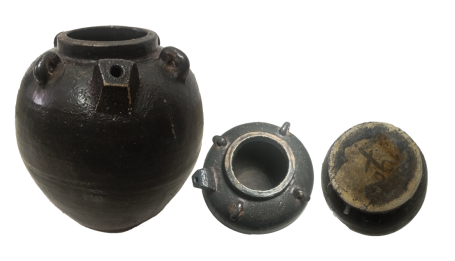
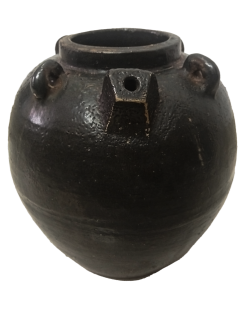
整件陶壶整体造型遵循实用至上的制器逻辑,线条简练流畅,比例沉稳协调。器物小口短颈,口沿微微外撇,宽厚的颈沿便于搭配陶盖封堵瓶口,减少内部液体、粮食挥发渗漏;壶身自肩部向下自然拓宽,腹部饱满浑圆,拥有充足储物空间,器底向内收束,放置时稳固不易倾倒。肩部均匀分布四组系耳,左右两侧为环形圆系,前方一方形穿孔系,后方搭配小型短系,四种系耳造型各有用途:圆环系可穿绳双人抬运,方形穿孔便于悬挂于房梁、灶台侧边,小型短系辅助固定捆扎。通体施黑褐釉,釉层厚薄自然,表层带有细微凹凸颗粒质感,是传统柴窑烧制形成的原生釉面肌理,釉色深沉匀净,局部口沿、底足釉层自然流淌变薄,隐约露出内里灰褐色胎土,形成深浅过渡的自然层次感,完全无人工刻意修饰痕迹,尽显陶作随性自然的工艺特点。
The overall shape of the whole pottery pot follows the utensil-making logic of putting practicality first, with concise and smooth lines and stable and coordinated proportions. It has a small mouth and a short neck, with the rim slightly flaring outwards. The wide neck edge is convenient to match a pottery lid to block the mouth and reduce the volatilization and leakage of internal liquids and grains. The pot body naturally widens downward from the shoulder, with a plump and round belly that provides sufficient storage space, and the bottom shrinks inward, making it stable and not easy to tip over when placed. Four groups of lugs are evenly distributed on the shoulder: circular ring lugs on the left and right sides, a square perforated lug in the front, and a small short lug at the back. Each shape of the four lugs has its own purpose: the ring lugs can be threaded with ropes for two people to carry, the square hole is convenient for hanging on beams or beside stoves, and the small short lugs assist in binding and fixing. The whole body is coated with black-brown glaze with naturally varying thickness, and the surface has tiny concave-convex grain texture, which is the native glaze texture formed by traditional firewood kiln firing. The glaze color is deep and even, and the glaze layers at partial rims and feet naturally flow and thin, faintly revealing the gray-brown clay inside, forming a natural hierarchical sense of depth transition. There is no trace of deliberate artificial modification at all, showing the casual and natural craft characteristics of folk pottery making.
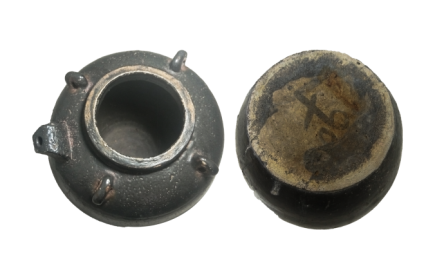
配套同窑烧制的小型黑釉盖罐与原器底托,与主壶构成一套完整储纳器具,三者釉色、胎土质感高度统一,佐证为同期同窑一次烧制而成。小型四系盖罐形制复刻大壶设计,同样肩部四系、小口收腹,可分装酒水、酱料、油料等小件物资,适配家庭精细化储存需求;配套底托为平底圆台造型,底面留存手写墨书标记,是古时商铺、农户区分器物归属、标注储放物资的简易标识。在物资匮乏的古代农耕家庭,大小配套储陶分工明确:大壶储存米粮、清水、酿酒原浆等大宗物资,小罐分装调味、油膏,底托承托器身隔绝地面潮气,一套器物完整覆盖居家储存全部需求。这种大小成套、功能细分的器物设计,充分体现古代匠人贴合百姓日常、兼顾收纳、搬运、防潮的周全巧思,区别于单一功能的陈设瓷器,纯粹为民生使用而生。
The matching small black-glazed covered jar and original base fired in the same kiln form a complete set of storage utensils with the main pot. The glaze color and clay texture of the three pieces are highly unified, proving that they were fired in the same kiln in the same period. The small four-loop covered jar copies the design of the large pot, also with four lugs on the shoulder and a small mouth and contracted belly. It can be used to pack small supplies such as wine, sauce and oil to meet the refined storage needs of families. The matching base is a flat-bottomed round platform, with handwritten ink marks on the bottom surface, which were simple marks for ancient shops and farmers to distinguish utensil ownership and label stored materials. In ancient agricultural families with scarce materials, large and small supporting storage pottery had clear divisions of labor: the large pot stored bulk materials such as rice, clean water and wine raw pulp, the small jar held seasonings and ointments, and the base supported the utensil body to isolate ground moisture. A complete set of utensils fully covered all household storage needs. This design of matching sizes and subdivided functions fully reflects the thoughtful ingenuity of ancient folk potters who fit people's daily lives and take storage, handling and moisture resistance into account, different from single-functional decorative porcelain, which was purely made for people's livelihood use.
黑釉粗陶在唐宋至明清民间广泛流行,黑釉原料取材便捷,多就地开采含铁黏土,烧制门槛低,各地窑场均可批量生产,是平民家庭人人可用的平价生活器。这件四系壶没有文人书画、雕瓷描金等装饰元素,全部设计围绕实用展开,却在极简形制里藏着独属于乡土的审美:厚重器身带来安稳踏实的视觉感受,深沉黑釉适配旧时农家烟熏火燎的居家环境,多系结构贴合百姓搬运、悬挂的劳作习惯。历经长久使用,釉面留存岁月打磨形成的温润包浆,细微磨损、自然釉裂都不是器物瑕疵,而是一代代人使用留下的时光印记。相较于博物馆中流光溢彩的官窑重器,这类民间黑釉陶壶更贴近真实的古代生活,它不承载皇家礼制与文人雅趣,只记录柴米油盐的人间烟火,是流淌在乡土文明里最朴素的文化载体。
Black-glazed rough pottery was widely popular among the people from the Tang and Song dynasties to the Ming and Qing dynasties. Raw materials for black glaze were easy to obtain, mostly iron-containing clay mined locally, with low firing thresholds, and mass production could be carried out in folk kilns everywhere, making it an affordable daily utensil available to every civilian family. This four-loop pot has no decorative elements such as literati calligraphy and painting or carved porcelain with gold tracing, and all designs revolve around practicality, yet it contains a unique rural aesthetic in its minimalist shape: the heavy body brings a stable and down-to-earth visual experience, the deep black glaze adapts to the smoky living environment of old farmhouses, and the multi-loop structure fits the working habits of people carrying and hanging goods. After long-term use, the glaze surface retains warm patina formed by years of polishing. Slight wear and natural glaze cracks are not defects of the utensil, but traces of time left by generations of users. Compared with the brilliant imperial kiln treasures in museums, such folk black-glazed pottery pots are closer to real ancient life. They do not bear royal rituals and literati elegance, but only record the mortal life of daily necessities, serving as the simplest cultural carrier flowing in rural civilization.
一件朴素的黑釉四系陶壶,浓缩了千年民间制陶的生存智慧与乡土美学。官窑瓷器为礼制、赏玩而生,而民间粗陶为烟火民生而造,二者共同构筑完整的中华陶瓷文明。这件器物从胎土采炼、施釉烧制,到多系功能结构、成套配套设计,每一处细节都以百姓实际需求为核心,摒弃多余装饰,以实用性为第一准则。深沉乌亮的黑釉包裹着浑厚陶胎,四系承托起古时百姓的日常劳作,大小配套陶罐见证农耕家庭细碎的居家生活。时至今日,当我们凝视这件饱经岁月的黑釉四系壶,能透过粗粝温润的釉面触摸到千百年前平凡百姓的生活脉搏,读懂民间匠人不事雕琢、务实求真的造物精神。它虽无华贵品相,却承载着最鲜活的民间生活记忆,让沉寂的乡土制陶文化得以具象留存,成为独树一帜的民间陶瓷文化见证。
A plain black-glazed four-handled pottery pot condenses the survival wisdom and rural aesthetics of thousands of years of folk pottery making. Imperial kiln porcelain was made for rituals and appreciation, while folk rough pottery was created for mortal livelihood, and the two together form a complete Chinese ceramic civilization. From clay mining and refining, glaze coating and firing, to multi-loop functional structure and matching set design, every detail of this utensil centers on people's actual needs, abandons redundant decorations, and takes practicality as the primary criterion. The deep shiny black glaze wraps the thick pottery body, the four lugs support the daily labor of ancient people, and the matching large and small pottery cans witness the trivial home life of agricultural families. To this day, when we gaze at this time-worn black-glazed four-loop pot, we can touch the life pulse of ordinary people thousands of years ago through the rough and warm glaze surface, and understand the craftsman spirit of folk potters who avoid elaborate decoration and pursue pragmatism and truth. Though lacking luxurious appearance, it bears the most vivid memories of folk life, enables the silent rural pottery culture to be preserved concretely, and becomes a unique witness of folk ceramic culture.