
明代是青花瓷发展的黄金时代,宣德一朝更是将青花烧制技艺推至历史顶峰,素有 “宣青为贵” 的行业定论。彼时宫廷御窑用料考究、绘工严谨,器型多承袭古礼,融合汉藏多元文化审美,这件青花僧帽壶便是宣德御窑经典制式器物。整器取法藏传佛教僧帽造型,白釉温润如玉,钴料发色浓艳沉稳,通体分层绘缠枝莲、八吉祥、螭龙祥云多重纹样,将皇家威严、佛道吉祥寓意与顶尖制瓷工艺融为一体,完整呈现宣德时期官窑瓷器雄浑饱满、纹饰繁复有序的独特艺术风貌,是承载明代民族交融、宫廷礼制与绘画美学的珍贵陶瓷实物。
The Ming Dynasty marked the golden age of blue and white porcelain, and the Xuande reign pushed the firing craft of blue and white porcelain to its historical peak, earning the widely recognized appraisal that "Xuande blue and white porcelain holds supreme value". Imperial kilns of that era used premium raw materials and rigorous painting techniques. Most vessel shapes inherited ancient rituals and integrated aesthetic concepts from both Han and Tibetan cultures. This blue and white monk’s cap ewer is a classic form crafted in Xuande imperial kilns. Modelled after the hat worn by Tibetan Buddhist monks, the vessel is covered with jade-like milky white glaze and coated with rich, stable cobalt pigment. Layers of patterns including intertwined lotus flowers, eight auspicious symbols, chi dragons and auspicious cloud motifs adorn its surface, seamlessly merging imperial dignity, Buddhist and Taoist auspicious symbolism with top-tier ceramic craftsmanship. It fully embodies the distinctive artistic style of official porcelain from the Xuande era—robust and full-bodied forms paired with intricate, well-organized ornamentation, serving as a precious ceramic artifact that records ethnic integration, court rituals and painting aesthetics of the Ming Dynasty.
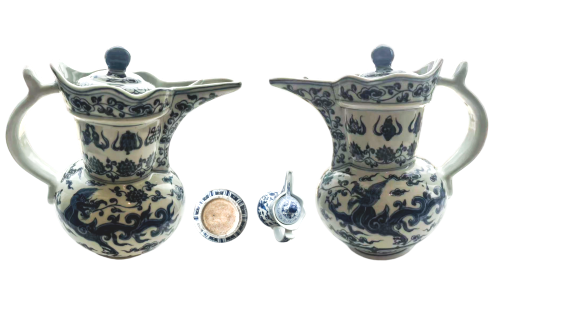
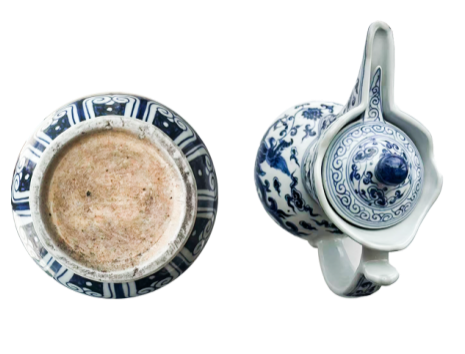
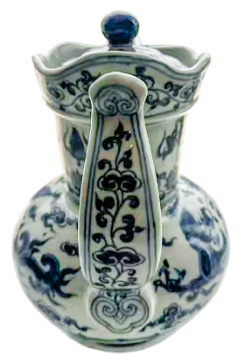
整件僧帽壶造型构思巧妙,线条雄浑流畅,各部位比例协调,兼具礼器的端庄与日用器的实用。口沿为标志性波浪僧帽式长流,弧度舒展,出水流畅;配套宝珠钮盖严合帽口,盖面满绘卷草缠枝纹样;颈部直立挺拔,分两层主题纹饰;腹部圆鼓饱满,是全器视觉核心;一侧安置弧形宽把手,柄身绘如意缠枝花卉,末端做云纹收束,握持稳固;底部圈足宽厚,外壁环绕一圈规整仰莲纹,足底露胎,可见细腻紧实的浅黄土胎,是宣德官窑典型胎土特征。器物整体没有纤细单薄的线条,轮廓圆润厚重,契合宣德瓷器 “雄健大气” 的时代特征,这件融合藏传佛教器型的瓷壶,最初作为朝廷赏赐藏地僧众、用于佛前净水供奉的礼器,见证明代中原与雪域高原长久的文化交流。
This monk’s cap ewer boasts an ingenious design with powerful, smooth lines and well-balanced proportions, combining the solemn bearing of ritual wares and the practicality of daily utensils. Its mouth takes the iconic wavy monk’s cap shape with an elongated spout of graceful curve for smooth water flow. A matching lid topped with a pearl knob fits tightly over the cap-shaped mouth, its surface fully decorated with scrolling vine patterns. The upright neck is split into two layers of themed ornamentation, while the plump rounded belly forms the visual focal point of the whole piece. A wide curved handle sits on one side, painted with ruyi intertwined flowers and finished with cloud motifs for stable gripping. The broad ring foot is encircled by neat upward lotus patterns on its outer wall, with exposed pale yellow fine compact clay on the base, a typical clay characteristic of Xuande official kilns. No thin, fragile lines appear on the vessel; all contours are rounded and substantial, matching the era’s defining trait of "vigorous grandeur" for Xuande porcelain. This Buddhist-style ewer was originally a ritual vessel for presenting pure water before Buddha statues, awarded by the imperial court to Tibetan monks, bearing witness to long-term cultural exchanges between the Central Plains and the Tibetan Plateau in the Ming Dynasty.
壶腹主体环绕绘大型螭龙祥云纹样,是全器最具艺术张力的核心画面。螭龙为上古瑞兽,无角似龙,自古寓意辟邪纳福、子孙绵延,宣德官窑常将其作为核心纹饰彰显皇家祥瑞气场。器身螭龙身姿舒展遒劲,身躯蜿蜒盘绕缠枝莲花,龙鳞以细密排线层层勾勒,线条利落清晰;龙首昂扬回望,眉眼刻画细腻,鬃毛分层飘逸,四肢遒劲有力踏于流云之上,周身环绕多层如意祥云,云纹卷曲灵动,虚实相生。画师以浓淡分层青花料表现瑞龙体积感,龙身浓青凸显厚重,祥云与莲花用浅淡青料衬托层次,主次分明。螭龙身旁缠绕盛放缠枝莲,莲花象征清净圣洁,与螭龙瑞兽纹样相融,暗含福寿双全、清净吉祥的双重美好祈愿,整幅龙纹布局疏密得当,毫无拥挤杂乱之感,尽显宣德宫廷画师纯熟的绘画功底,把瑞兽的灵动威严完美定格于瓷胎之上。
A grand chi dragon and auspicious cloud pattern wraps around the main belly, forming the most artistically striking core scene of the vessel. The chi dragon is an ancient sacred beast resembling a hornless dragon, symbolizing warding off evil spirits, attracting blessings and prosperous descendants since antiquity. Xuande imperial kilns frequently used it as central ornamentation to display auspicious imperial energy. The chi dragon on the pot unfolds in a powerful winding posture, its body coiled around intertwined lotus blossoms. Fine layered linework meticulously depicts its scales with crisp strokes. Its raised head turns backward, featuring exquisitely rendered eyes and brows alongside flowing layered manes. Powerful limbs tread upon curling layered ruyi auspicious clouds that shift fluidly between solid and empty forms. Painters applied cobalt pigment of varying shades to create the dragon’s three-dimensional texture: deep rich blue emphasizes the solidity of the dragon body, while lighter blue sets off the clouds and lotus flowers for distinct layers, separating primary and secondary motifs clearly. Blooming intertwined lotus vines twist beside the chi dragon; the lotus stands for purity and holiness, blending harmoniously with the sacred beast pattern to embody dual blessings of longevity, fortune and serene auspiciousness. The well-balanced composition avoids clutter, fully demonstrating the masterful painting skill of imperial painters under the Xuande reign, who perfectly captured both agility and solemn majesty of the sacred beast upon the porcelain body.
器物颈部上下分饰两层主题纹饰,与腹部螭龙主纹形成层次呼应。上层口沿下方绘制一圈缠枝卷草,连绵枝叶环绕器身,线条婉转柔和,起到过渡装饰作用;下层主体绘八吉祥纹饰,依次排列法轮、法螺、宝伞、白盖、莲花、宝瓶、宝幢、金鱼八种佛家法器,每一件法器轮廓清晰,搭配小型莲花枝叶衬托。八吉祥是藏传佛教核心吉祥符号,代表佛法圆满,与僧帽壶佛礼器的属性高度契合,颈间佛道纹饰与腹部皇家螭龙瑞兽纹样上下呼应,实现佛韵与皇权美学的融合。整件器物青花用料为苏麻离青,釉面白润泛淡青,青花深入胎骨,部分纹样自然晕散形成独特铁锈斑,是宣德青花独有的标志性质感,釉面光泽温润内敛,没有浮艳刺眼的光亮,尽显官窑瓷器沉稳雅致的气韵。
Two layers of themed ornamentation decorate the upper and lower sections of the neck, echoing the main chi dragon pattern on the belly. A band of scrolling intertwined vines runs beneath the rim, with winding soft branches wrapping the vessel as transitional decoration. The lower neck features the Eight Auspicious Symbols of Buddhism, arranged sequentially: the Dharma wheel, conch shell, precious umbrella, white canopy, lotus flower, sacred vase, victory banner and golden fish. Each ritual artifact is clearly outlined and set off by tiny lotus branches. As core auspicious symbols of Tibetan Buddhism representing complete Dharma, the Eight Auspicious Symbols perfectly match the vessel’s identity as a Buddhist ritual pot. Buddhist neck patterns harmonize vertically with the imperial chi dragon sacred beast motif on the belly, uniting Buddhist charm and imperial aesthetic taste. The blue pigment used is Su Mali cobalt ore exclusive to early Ming imperial kilns, laid into the clay body beneath soft pale celadon white glaze. Natural faint iron rust spots appear where pigment pools, a unique signature texture of Xuande blue and white porcelain. The glaze emits mild restrained luster free of harsh glare, embodying the steady elegant bearing of imperial official porcelain.
自宣德年间烧制问世,僧帽壶便成为宫廷专属礼器,这件青花螭龙僧帽壶集独特器型、多层吉祥纹饰、顶级青花工艺于一身,承载多重历史与美学价值。器型见证汉藏文化交融,八吉祥纹样留存佛教礼俗印记,腹部螭龙祥龙纹样传递明代皇家祈福观念,宣德独有的苏麻离青釉色定格一朝制瓷巅峰。一件瓷壶,将礼佛供奉、皇家审美、手工绘画、窑火工艺尽数浓缩,透过釉下浓艳灵动的螭龙祥云,我们得以窥见明代宣德朝繁荣开放的文化格局与登峰造极的制瓷水准。跨越数百年时光,这件器物完整留存当年御窑的制作细节,龙纹、花卉、佛宝纹样清晰完好,雄浑古朴的气韵不曾消散,成为解读宣德青花官窑文化、传统瑞兽纹饰美学不可多得的实物载体
Since their initial firing in the Xuande reign, monk’s cap ewers have remained exclusive imperial ritual wares. This blue and white chi dragon monk’s cap ewer integrates a distinctive form, multi-layered auspicious ornamentation and premium blue and white craftwork, bearing rich historical and aesthetic value. Its shape records Han-Tibetan cultural integration; the Eight Auspicious Symbols preserve traces of Buddhist ritual customs; the chi dragon sacred beast pattern on the belly conveys the imperial court’s pursuit of blessings in the Ming Dynasty; and the unique Su Mali cobalt glaze captures the peak ceramic craftsmanship of the era. A single porcelain pot encapsulates Buddhist worship rituals, imperial aesthetics, hand painting and kiln firing techniques. Through the vivid underglaze chi dragons and auspicious clouds, we witness the prosperous, open cultural landscape and unparalleled ceramic standards of the Xuande reign. After hundreds of years, the vessel retains all original imperial kiln production details with intact clear dragon, flower and Buddhist treasure patterns, its robust ancient charm undiminished. It stands as an invaluable physical artifact for interpreting Xuande blue and white official kiln culture and the aesthetic tradition of ancient sacred beast ornamentation.