
在中国陶瓷发展长河里,明代成化官窑青花瓷素来以温润淡雅的釉色、纤细灵动的绘画笔法独树一帜,是古瓷收藏界公认的青花艺术巅峰。这件大明成化年制青花花卉纹碗为经典超薄胎形制,内外分绘宝相缠枝纹样,采用成化朝独有的平等青钴料,将明代宫廷含蓄内敛的审美、成熟精细的制瓷工艺与佛教吉祥纹样文化融为一体,在青白相映的釉面之上,诉说着“以瓷承礼、以青绘雅、以纹藏福”的官窑陶瓷内核,器物打灯通透之时,器身内外纹饰完整显露,层次美感浑然天成,既是成化官窑日用御瓷的标准范本,也是映照明代中期宫廷美学的珍贵实物遗存。
In the long course of Chinese ceramic development, official blue and white porcelain of the Chenghua reign in the Ming Dynasty has always stood out for its mild and elegant glaze color and slender, vivid painting brushwork, recognized as the peak of blue and white art in antique porcelain collection circles. This blue and white flower-patterned bowl marked "Made in the Chenghua Reign of the Great Ming" adopts a classic ultra-thin body structure, painted with interlocking treasure flower patterns both inside and outside, and adopts the unique equal blue cobalt pigment exclusive to the Chenghua period. It perfectly integrates the reserved and restrained aesthetic of the Ming imperial court, mature and delicate porcelain making craftsmanship and the cultural tradition of Buddhist auspicious patterns. On the glaze surface blending blue and white hues, it interprets the core of official kiln ceramics: inheriting etiquette with porcelain, expressing elegance with blue glaze, and hiding blessings with patterns. When illuminated by light, the inner and outer decorative patterns of the vessel are fully presented with exquisite layered beauty. It is not only a standard model of imperial daily porcelain from Chenghua official kilns, but also a precious physical relic reflecting the court aesthetics of the mid-Ming Dynasty.
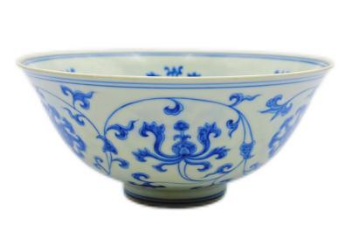
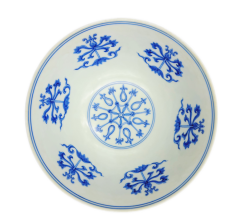
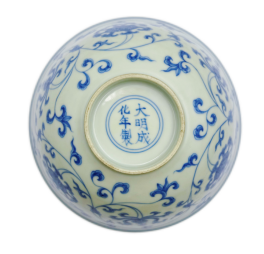
从器型、纹饰与款识细节品读,这件青花碗完整保留了成化官窑标志性的制式特征。器身为经典敞口浅腹碗造型,口沿微微外撇,弧腹缓缓向内收束,底部圈足小巧规整,整体线条柔和圆润,无尖锐棱角,贴合明代宫廷日用瓷器舒适素雅的设计标准。其超薄胎体是本品一大核心亮点,胎壁纤薄轻盈,透光性极佳,光源照射下可清晰观赏碗体内外壁全部青花纹样,内外纹饰相互映衬,景致别致唯美。通体施肥厚温润的白釉,釉面莹润泛淡淡的米白柔光,是成化官窑独有的“猪油白”釉质感,能够柔和衬托钴料淡雅的蓝色。碗外壁通体绘连绵不绝的缠枝宝相花,藤蔓婉转纤细,花瓣层叠舒展,卷草枝叶轻盈飘逸,笔触细劲流畅,是成化官窑典型的“一笔点划”绘画技法;碗内心设圆形开光,内绘八瓣宝相花轮,内壁环绕六组独立宝相花卉,布局均衡对称,疏密恰到好处,满工却不显繁乱。碗底双圈楷书款“大明成化年制”,字体稚拙规整,笔锋柔和,是后世鉴定成化官窑瓷器的核心标识。每一缕缠枝藤蔓、每一片花瓣勾勒、每一寸温润白釉,都凝聚着成化官窑匠人数十年锤炼的纯熟功力,是解读明代中期御窑绘瓷、修胎工艺的关键实物依据。
When we appreciate this blue and white bowl from the details of shape, decoration and inscription, it completely retains the iconic format features of Chenghua official kilns. The vessel adopts the classic open-mouthed shallow-bowl shape, with slightly flared rim, arc belly gently tapering inward, and small regular ring foot at the bottom. The overall lines are soft and round without sharp edges, conforming to the comfortable and plain design standard of daily imperial porcelain in the Ming court. Its ultra-thin porcelain body is a core highlight of this work. The porcelain wall is thin and light with excellent light transmittance. Under light irradiation, all blue and white decorations on both inner and outer walls can be clearly seen, and the internal and external patterns set off each other to form a unique aesthetic effect. The whole piece is covered with thick and mild white glaze, the glaze surface is lustrous with faint cream soft light, the unique "lard white" glaze texture exclusive to Chenghua official kilns, which can softly set off the elegant blue of cobalt pigment. The outer wall of the bowl is fully painted with endless interlocking treasure flowers, slender twisting vines, layered and stretched petals, light and floating curly grass leaves, thin and smooth brush strokes, the typical "one-stroke dotting" painting technique of Chenghua official kilns. The center of the bowl interior is set with a circular medallion painted with eight-petaled treasure flower wheel, and six groups of independent treasure flowers surround the inner wall, with balanced and symmetrical layout and proper density, full decoration yet not messy. The bottom bears regular script six-character mark "Made in the Chenghua Reign of the Great Ming" within double circles, with naive and neat font and soft strokes, the core mark for authenticating Chenghua official kiln porcelain for later generations. Every twisting vine, every outlined petal and every inch of mild white glaze embodies the seasoned skill of craftsmen in Chenghua imperial kilns who honed their craft for decades, serving as vital physical evidence for researching the porcelain painting and body trimming techniques of mid-Ming imperial kilns.
烧制工艺与人文寓意层面,成化青花碗承载着“御窑精工为骨,儒佛雅致文脉为魂”的创作内核。成化官窑烧制管控严苛,胎土经过多重淘洗,细腻坚致,超薄胎体的成型修胎工序难度倍增,对工匠技艺要求极高;选用国产平等青料,摒弃永宣时期浓艳粗犷的苏麻离青,发色浅淡柔和、蓝中泛灰,营造出温润素雅的视觉效果,完美匹配成化皇帝偏爱内敛清淡审美的个人喜好。繁复的缠枝宝相花纹样源自佛教艺术,宝相花融合莲花、牡丹形态,象征清净吉祥、富贵绵长,连绵缠绕的枝蔓寓意生生不息、皇室代代安康,将佛家清净理念与宫廷祈福文化融为一体。这件器物作为宫廷日常用餐、饮茶的御用碗具,把宗教吉祥符号融入平凡日用,超薄通透的特质也让器物兼具观赏与实用双重价值,体现明代皇室“雅俗相融”的生活美学。整套烧制工序分工精细,制坯、绘青、罩釉、入窑分工明确,多重低温、高温分段烧制,超薄胎体极易在烧制过程中变形破损,成品率极低,仅供给皇宫内府使用,民间极少流通,是明代皇权等级与官窑严苛规制的直观体现。
In terms of firing craft and humanistic implication, this Chenghua blue and white bowl carries the creative core of exquisite imperial kiln craftsmanship as the foundation and elegant Confucian and Buddhist cultural heritage as the soul. The firing management of Chenghua official kilns was extremely strict, the clay underwent multiple elutriation to become fine and solid. The forming and trimming procedures for the ultra-thin body were far more difficult and required superb craftsmanship. Domestic equal blue pigment was adopted, abandoning the rich and unrestrained Sumali cobalt used in Yongle and Xuande periods, presenting pale soft blue tint with faint grey undertones, creating a mild and plain visual effect, perfectly matching the reserved and light aesthetic preference of the Chenghua Emperor. The intricate interlocking treasure flower patterns originate from Buddhist art. The treasure flower integrates the forms of lotus and peony, symbolizing purity, auspiciousness, wealth and longevity, and the endless twisting vines stand for perpetual vitality and lasting peace of the royal family, merging Buddhist pure philosophy with court blessing culture. As an imperial bowl for daily dining and tea drinking in the palace, this vessel integrates religious auspicious symbols into ordinary daily use. Its ultra-thin transparent feature endows it with both ornamental and practical value, reflecting the life aesthetic of "blending elegance and popularity" of the Ming royal family. The whole set of firing procedures had fine division of labor including blank forming, blue painting, glazing and kiln firing, with segmented low and high temperature firing. The ultra-thin body was prone to deformation and damage during firing, leading to an extremely low yield rate. It was exclusively supplied to the imperial palace with rare folk circulation, a direct reflection of imperial hierarchy and strict official kiln regulations in the Ming Dynasty.
历史与收藏价值维度来看,大明成化青花花卉纹碗是明代中期官窑美学的微型文化镜像。作为成化青花标准日用御器,这件青花碗兼具罕见超薄胎体、打灯通透见双纹的独特品相,搭配纯正平等青发色、正统缠枝宝相花纹、标准六字双圈款,成为古陶瓷收藏领域万众追捧的顶级珍品,兼具不可复刻的宫廷历史价值、传统宗教美学价值、工艺研究价值与传世收藏保值价值。完整无磕冲、釉色完好、胎体超薄的成化官窑青花存世数量极其稀少,大多被国内外各大博物馆馆藏,民间完整真品寥寥无几。它早已超越普通饮食器具的实用属性,成为串联明代官窑制度、宫廷审美、佛道民俗纹样文化、超薄胎烧制技艺的核心纽带,是考古学家复原明代中期皇室生活、手工业工艺、审美变迁的一手实物史料。细细端详这件青花碗,淡雅柔和的青花纹样浮于温润白釉之上,透光观赏时内外纹样相映成趣,成化朝独有的清雅气韵扑面而来,在一蓝一白之间,读懂明代官窑独有的内敛风骨,感受跨越六百年依旧动人的中式古典瓷绘美学。
From the perspective of historical and collection value, the Chenghua blue and white flower-patterned bowl of the Great Ming is a miniature cultural mirror of mid-Ming official kiln aesthetics. As a standard daily imperial blue and white ware of the Chenghua reign, this bowl boasts rare ultra-thin porcelain body and the unique feature of double-sided visible patterns under light, together with pure equal blue tint, orthodox interlocking treasure flower patterns and standard six-character double-circle mark. It is a top treasure sought after by all antique ceramic collectors, possessing irreproducible imperial historical value, traditional religious aesthetic value, craft research value and heritage collection preservation value. Intact Chenghua official kiln blue and white porcelain with perfect glaze and ultra-thin body are extremely rare, most collected in major museums at home and abroad, with very few complete genuine pieces circulating among private collectors. It has long transcended the practical attribute of ordinary tableware, evolving into a vital link connecting the Ming official kiln system, court aesthetics, Buddhist-Tao folk pattern culture and ultra-thin body firing technology, serving as first-hand physical historical material for archaeologists to reconstruct royal life, handicraft technology and aesthetic evolution of the mid-Ming Dynasty. When we carefully appreciate this blue and white bowl, the soft and elegant blue patterns float on the mild white glaze, and the internal and external patterns echo each other when viewed through transmitted light, bringing the unique quiet charm of the Chenghua era to viewers. Between blue and white hues, we can understand the reserved integrity exclusive to Ming official kilns, and experience the touching classical Chinese porcelain painting aesthetics that have lasted six hundred years.